















Back
All posts

Azure DevOps Plugins for Jira: Top Integrations in 2026

June 4, 2026
<a href="https://www.freepik.com/free-vector/business-team-brainstorm-idea-lightbulb-from-jigsaw-working-team-collaboration-enterprise-cooperation-colleagues-mutual-assistance-concept-pinkish-coral-bluevector-isolated-illustration_11667116.htm#query=collaboration&position=2&from_view=keyword&track=sph&uuid=21ea3c1d-7461-49c7-9157-5822c4372896">Image by vectorjuice</a> on Freepik

If your engineering org runs Jira for project management and Azure DevOps for code and pipelines, you need a bridge between them. The Atlassian Marketplace has several options, each with different tradeoffs around depth of integration, pricing, and platform support. This guide reviews the top Azure DevOps plugins for Jira in 2026 and breaks down what each one actually does well.

For a broader comparison of the two platforms themselves, see our Azure DevOps vs Jira comparison guide. This post focuses specifically on the integration tools that connect them.

What to Look for in an Azure DevOps Jira Plugin

Before comparing individual apps, here's what matters most in an ADO-Jira integration:

  • Dev panel visibility: Can developers see commits, branches, pull requests, and builds directly inside Jira issues?
  • Branch creation from Jira: Can you create Azure DevOps branches from within a Jira issue without switching tools?
  • Bi-directional sync: Do changes in one tool reflect in the other automatically?
  • Smart commits: Can commit messages update Jira issue status, log time, or add comments?
  • Platform support: Does it work with Jira Cloud, Data Center, or both?
  • Security model: How does the integration access your code — OAuth, PAT tokens, or direct repo access?

The Options at a Glance

Here is how the five approaches compare before we dig into each one:

OptionPlatformPricingDev panel dataBranch from JiraGit platforms
Azure DevOps for Jira (Move Work Forward)Jira CloudFree tier + paidCommits, PRs, builds, deploymentsYesAzure DevOps
Jigit (Move Work Forward)Jira Cloud & Data CenterFree tier + paidCommits, branches, PRsYes — all platformsGitHub, GitLab & Azure DevOps
Azure DevOps for Jira (official, Atlassian)Jira CloudFreeBasic commit & branch linkingNoAzure DevOps
Automation platforms (Zapier, Make, Power Automate)Jira CloudPer-taskNone (no dev panel)NoVaries
Custom API integrationAnyBuild & maintain costWhatever you buildDependsDepends

1. Azure DevOps for Jira (by Move Work Forward)

Platform: Jira Cloud
Pricing: Free tier available, paid plans for larger teams
Best for: Teams that want deep, native-feeling ADO visibility inside Jira

Azure DevOps for Jira is the most comprehensive marketplace integration for connecting Azure DevOps to Jira Cloud. Used by thousands of organizations, it surfaces Azure DevOps activity directly in Jira's development panel — the same place where GitHub and Bitbucket data appears natively.

Key Features

  • Full dev panel integration: Commits, branches, pull requests, builds, and deployments all appear in the Jira issue's development panel. No separate tabs or panels to check.
  • Create branches from Jira: Start an Azure DevOps branch directly from a Jira issue with auto-generated branch names based on the issue key and summary. See our step-by-step branch creation guide for the full walkthrough.
  • Smart commits: Include Jira issue keys in commit messages to automatically link commits, transition issues, or log time. For example, ABC-123 #done Fixed null reference in auth module transitions the issue to Done.
  • Build and deployment tracking: See the current build status and deployment environment directly on the Jira issue. Know whether a fix has been deployed to staging or production without leaving Jira.
  • Automation triggers: Use Azure DevOps events as triggers in Jira Automation rules. For example, auto-transition an issue to "In Review" when a pull request is created.

Our Jira automation with Azure DevOps guide covers these automation workflows in detail.

Differentiators

The main advantage over competitors is the depth of data that flows into Jira. It's not just "a link was created" — you see commit messages, PR review status, build results, and deployment environments. The development panel integration means existing Jira workflows (like automation rules that trigger on development events) work out of the box. It also supports multiple Azure DevOps organizations and Jira projects in a single configuration, which matters for enterprises running complex multi-team setups.

2. Jigit (by Move Work Forward)

Platform: Jira Cloud and Data Center
Pricing: Free tier available, paid plans for larger teams
Best for: Security-conscious organizations, teams using multiple Git providers, Data Center customers

Jigit takes a different approach. Instead of connecting to a single Git provider, it supports GitHub, GitLab, and Azure DevOps from a single app. If your organization uses Azure DevOps for some teams and GitHub for others, Jigit covers both without installing multiple integrations.

Key Features

  • Multi-provider support: Connect GitHub, GitLab, and Azure DevOps repositories to the same Jira instance.
  • REST API-based access: Jigit connects to your Git providers via their REST APIs using personal access tokens or OAuth. It never clones your repositories or accesses source code directly — a significant advantage for security-conscious organizations.
  • Data Center support: If you're still running Jira Data Center (on-premise or self-hosted), Jigit works there. Most cloud-only integrations don't.
  • Dev panel integration: Like Azure DevOps for Jira, Jigit surfaces commits, branches, and PRs in Jira's development panel.

When to Choose Jigit Over Azure DevOps for Jira

Choose Jigit if you need Data Center support, use multiple Git providers, or have strict security requirements around source code access. Choose Azure DevOps for Jira if you're all-in on Jira Cloud and Azure DevOps and want the deepest possible integration with build and deployment tracking.

3. Azure DevOps for Jira (Official — by Atlassian)

Platform: Jira Cloud
Pricing: Free
Best for: Teams that need a basic, zero-cost connection

Atlassian offers an official Azure DevOps integration that's free for all Jira Cloud customers. It provides basic commit and branch linking through the development panel.

What It Does Well

  • Free: No cost, no trial period. If budget is the primary constraint, this is worth evaluating first.
  • Atlassian-supported: Maintained by Atlassian, so it follows the standard Jira development panel conventions.
  • Basic linking: Commits and branches with Jira issue keys appear in the development panel.

Limitations

  • Limited customization: Filtering, advanced automation triggers, and deployment tracking are either absent or basic.
  • No branch creation from Jira: You can't create Azure DevOps branches directly from a Jira issue.
  • No build/deployment visibility: Build status and deployment environment tracking are not included at the same depth as third-party options.
  • Configuration flexibility: Limited options for mapping multiple ADO organizations or configuring per-project behavior.

For teams with simple needs — a few repos, one ADO organization, no automation requirements — the official integration may be sufficient. For anything beyond that, third-party options provide significantly more capability.

4. Automation Platforms (Zapier, Make, Power Automate)

Platform: Jira Cloud (varies by platform)
Pricing: Varies; typically per-automation or per-task pricing
Best for: Custom, non-standard workflows between ADO and Jira

General-purpose automation platforms like Zapier, Make (formerly Integromat), and Microsoft Power Automate can connect Jira and Azure DevOps through their respective APIs. These aren't Jira marketplace apps — they're external platforms that orchestrate actions between tools.

When This Makes Sense

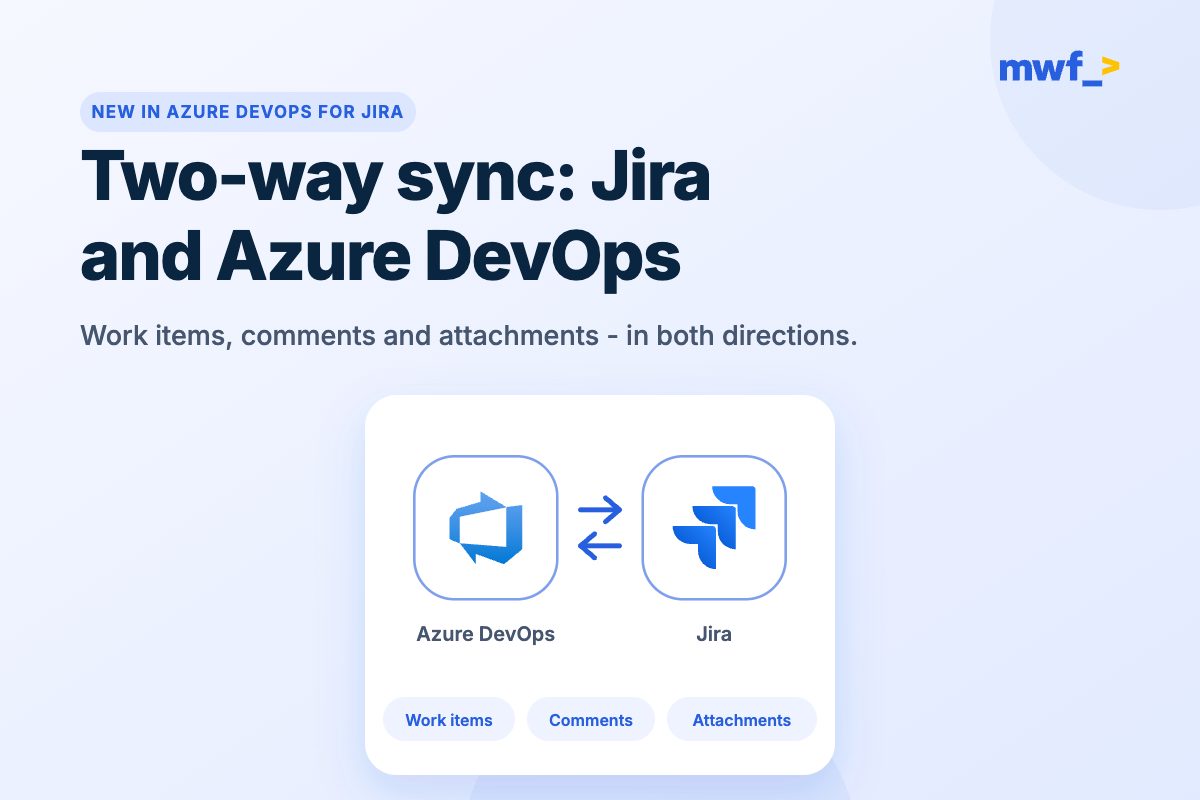
  • You need to sync work items bi-directionally (create a Jira issue when an ADO work item is created, and vice versa).
  • Your workflow involves other tools beyond Jira and ADO (Slack, email, databases).
  • You need highly custom logic that no marketplace app supports.

Limitations

  • No dev panel integration: These platforms can't write data into Jira's development panel. You won't see commits or PRs in the standard Jira UI.
  • Ongoing maintenance: Custom automations break when APIs change. Someone has to own and maintain them.
  • Cost at scale: Per-task pricing adds up quickly for high-volume integrations. A busy project generating hundreds of commits and PRs per day can become expensive.
  • Latency: Webhook or polling-based triggers add seconds to minutes of delay compared to native integrations.

5. Custom API Integrations

Platform: Any
Pricing: Development and maintenance cost
Best for: Organizations with unique requirements and engineering capacity to build and maintain custom code

Both Jira and Azure DevOps have well-documented REST APIs. For teams with specialized requirements, building a custom integration is always an option.

Realistically, this only makes sense if your integration needs are genuinely unique and no marketplace app covers your use case. The development cost, ongoing maintenance burden, and API versioning headaches make this the most expensive option long-term. For the majority of teams, a marketplace app handles 90% or more of the requirements at a fraction of the cost.

Which One Should You Pick?

Match the tool to your priority rather than defaulting to whatever is free:

Your priorityRecommended option
Deepest Jira Cloud integration — dev panel, builds, deployments, branch creation, automation triggersAzure DevOps for Jira (Move Work Forward)
Multiple Git providers or Jira Data Center, with a security-focused access modelJigit (Move Work Forward)
Zero budget, basic linking onlyOfficial Atlassian integration
Custom workflows that reach beyond development dataZapier / Make / Power Automate
Genuinely unique edge cases with engineering capacity to maintain codeCustom API integration

For a deeper look at the integration approaches (not just the tools), our top 4 ways to integrate Jira with Azure DevOps covers strategy-level decisions around what to sync, how to handle work item mapping, and common architectural patterns.

If your engineering org runs Jira for project management and Azure DevOps for code and pipelines, you need a bridge between them. The Atlassian Marketplace has several options, each with different tradeoffs around depth of integration, pricing, and platform support. This guide reviews the top Azure DevOps plugins for Jira in 2026 and breaks down what each one actually does well.

For a broader comparison of the two platforms themselves, see our Azure DevOps vs Jira comparison guide. This post focuses specifically on the integration tools that connect them.

What to Look for in an Azure DevOps Jira Plugin

Before comparing individual apps, here's what matters most in an ADO-Jira integration:

  • Dev panel visibility: Can developers see commits, branches, pull requests, and builds directly inside Jira issues?
  • Branch creation from Jira: Can you create Azure DevOps branches from within a Jira issue without switching tools?
  • Bi-directional sync: Do changes in one tool reflect in the other automatically?
  • Smart commits: Can commit messages update Jira issue status, log time, or add comments?
  • Platform support: Does it work with Jira Cloud, Data Center, or both?
  • Security model: How does the integration access your code — OAuth, PAT tokens, or direct repo access?

The Options at a Glance

Here is how the five approaches compare before we dig into each one:

OptionPlatformPricingDev panel dataBranch from JiraGit platforms
Azure DevOps for Jira (Move Work Forward)Jira CloudFree tier + paidCommits, PRs, builds, deploymentsYesAzure DevOps
Jigit (Move Work Forward)Jira Cloud & Data CenterFree tier + paidCommits, branches, PRsYes — all platformsGitHub, GitLab & Azure DevOps
Azure DevOps for Jira (official, Atlassian)Jira CloudFreeBasic commit & branch linkingNoAzure DevOps
Automation platforms (Zapier, Make, Power Automate)Jira CloudPer-taskNone (no dev panel)NoVaries
Custom API integrationAnyBuild & maintain costWhatever you buildDependsDepends

1. Azure DevOps for Jira (by Move Work Forward)

Platform: Jira Cloud
Pricing: Free tier available, paid plans for larger teams
Best for: Teams that want deep, native-feeling ADO visibility inside Jira

Azure DevOps for Jira is the most comprehensive marketplace integration for connecting Azure DevOps to Jira Cloud. Used by thousands of organizations, it surfaces Azure DevOps activity directly in Jira's development panel — the same place where GitHub and Bitbucket data appears natively.

Key Features

  • Full dev panel integration: Commits, branches, pull requests, builds, and deployments all appear in the Jira issue's development panel. No separate tabs or panels to check.
  • Create branches from Jira: Start an Azure DevOps branch directly from a Jira issue with auto-generated branch names based on the issue key and summary. See our step-by-step branch creation guide for the full walkthrough.
  • Smart commits: Include Jira issue keys in commit messages to automatically link commits, transition issues, or log time. For example, ABC-123 #done Fixed null reference in auth module transitions the issue to Done.
  • Build and deployment tracking: See the current build status and deployment environment directly on the Jira issue. Know whether a fix has been deployed to staging or production without leaving Jira.
  • Automation triggers: Use Azure DevOps events as triggers in Jira Automation rules. For example, auto-transition an issue to "In Review" when a pull request is created.

Our Jira automation with Azure DevOps guide covers these automation workflows in detail.

Differentiators

The main advantage over competitors is the depth of data that flows into Jira. It's not just "a link was created" — you see commit messages, PR review status, build results, and deployment environments. The development panel integration means existing Jira workflows (like automation rules that trigger on development events) work out of the box. It also supports multiple Azure DevOps organizations and Jira projects in a single configuration, which matters for enterprises running complex multi-team setups.

2. Jigit (by Move Work Forward)

Platform: Jira Cloud and Data Center
Pricing: Free tier available, paid plans for larger teams
Best for: Security-conscious organizations, teams using multiple Git providers, Data Center customers

Jigit takes a different approach. Instead of connecting to a single Git provider, it supports GitHub, GitLab, and Azure DevOps from a single app. If your organization uses Azure DevOps for some teams and GitHub for others, Jigit covers both without installing multiple integrations.

Key Features

  • Multi-provider support: Connect GitHub, GitLab, and Azure DevOps repositories to the same Jira instance.
  • REST API-based access: Jigit connects to your Git providers via their REST APIs using personal access tokens or OAuth. It never clones your repositories or accesses source code directly — a significant advantage for security-conscious organizations.
  • Data Center support: If you're still running Jira Data Center (on-premise or self-hosted), Jigit works there. Most cloud-only integrations don't.
  • Dev panel integration: Like Azure DevOps for Jira, Jigit surfaces commits, branches, and PRs in Jira's development panel.

When to Choose Jigit Over Azure DevOps for Jira

Choose Jigit if you need Data Center support, use multiple Git providers, or have strict security requirements around source code access. Choose Azure DevOps for Jira if you're all-in on Jira Cloud and Azure DevOps and want the deepest possible integration with build and deployment tracking.

3. Azure DevOps for Jira (Official — by Atlassian)

Platform: Jira Cloud
Pricing: Free
Best for: Teams that need a basic, zero-cost connection

Atlassian offers an official Azure DevOps integration that's free for all Jira Cloud customers. It provides basic commit and branch linking through the development panel.

What It Does Well

  • Free: No cost, no trial period. If budget is the primary constraint, this is worth evaluating first.
  • Atlassian-supported: Maintained by Atlassian, so it follows the standard Jira development panel conventions.
  • Basic linking: Commits and branches with Jira issue keys appear in the development panel.

Limitations

  • Limited customization: Filtering, advanced automation triggers, and deployment tracking are either absent or basic.
  • No branch creation from Jira: You can't create Azure DevOps branches directly from a Jira issue.
  • No build/deployment visibility: Build status and deployment environment tracking are not included at the same depth as third-party options.
  • Configuration flexibility: Limited options for mapping multiple ADO organizations or configuring per-project behavior.

For teams with simple needs — a few repos, one ADO organization, no automation requirements — the official integration may be sufficient. For anything beyond that, third-party options provide significantly more capability.

4. Automation Platforms (Zapier, Make, Power Automate)

Platform: Jira Cloud (varies by platform)
Pricing: Varies; typically per-automation or per-task pricing
Best for: Custom, non-standard workflows between ADO and Jira

General-purpose automation platforms like Zapier, Make (formerly Integromat), and Microsoft Power Automate can connect Jira and Azure DevOps through their respective APIs. These aren't Jira marketplace apps — they're external platforms that orchestrate actions between tools.

When This Makes Sense

  • You need to sync work items bi-directionally (create a Jira issue when an ADO work item is created, and vice versa).
  • Your workflow involves other tools beyond Jira and ADO (Slack, email, databases).
  • You need highly custom logic that no marketplace app supports.

Limitations

  • No dev panel integration: These platforms can't write data into Jira's development panel. You won't see commits or PRs in the standard Jira UI.
  • Ongoing maintenance: Custom automations break when APIs change. Someone has to own and maintain them.
  • Cost at scale: Per-task pricing adds up quickly for high-volume integrations. A busy project generating hundreds of commits and PRs per day can become expensive.
  • Latency: Webhook or polling-based triggers add seconds to minutes of delay compared to native integrations.

5. Custom API Integrations

Platform: Any
Pricing: Development and maintenance cost
Best for: Organizations with unique requirements and engineering capacity to build and maintain custom code

Both Jira and Azure DevOps have well-documented REST APIs. For teams with specialized requirements, building a custom integration is always an option.

Realistically, this only makes sense if your integration needs are genuinely unique and no marketplace app covers your use case. The development cost, ongoing maintenance burden, and API versioning headaches make this the most expensive option long-term. For the majority of teams, a marketplace app handles 90% or more of the requirements at a fraction of the cost.

Which One Should You Pick?

Match the tool to your priority rather than defaulting to whatever is free:

Your priorityRecommended option
Deepest Jira Cloud integration — dev panel, builds, deployments, branch creation, automation triggersAzure DevOps for Jira (Move Work Forward)
Multiple Git providers or Jira Data Center, with a security-focused access modelJigit (Move Work Forward)
Zero budget, basic linking onlyOfficial Atlassian integration
Custom workflows that reach beyond development dataZapier / Make / Power Automate
Genuinely unique edge cases with engineering capacity to maintain codeCustom API integration

For a deeper look at the integration approaches (not just the tools), our top 4 ways to integrate Jira with Azure DevOps covers strategy-level decisions around what to sync, how to handle work item mapping, and common architectural patterns.

Articles you might like

Top 4 Ways to Integrate Jira with Azure DevOps
May 25, 2026
Top 4 Ways to Integrate Jira with Azure DevOps
Jira and Azure DevOps integrations generally fall under two categories: Development Information Integration and Work Item Integration. Read on to find out more about Jira and Azure DevOps integration possibilities.
Read more >
Azure DevOps vs Jira: Complete Comparison Guide [2026]
June 3, 2026
Azure DevOps vs Jira: Complete Comparison Guide [2026]
Azure DevOps and Jira are both excellent platforms, but they excel at different things. After helping 7,500+ organizations integrate both tools, here's our complete comparison — including pricing, AI features, and when to use both together.
Read more >
How to Create an Azure DevOps Branch from Jira
June 4, 2026
How to Create an Azure DevOps Branch from Jira
Create Azure DevOps branches directly from Jira issues in under 30 seconds. This step-by-step guide covers setup, permissions, branch naming best practices, and CI/CD workflow implications.
Read more >

Articles you might like

New blog posts

How to Connect Jira to GitHub Enterprise Server
June 4, 2026
How to Connect Jira to GitHub Enterprise Server
GitHub Enterprise Server setup is different from Cloud. This step-by-step guide covers PAT generation, Jigit configuration, webhook setup, and troubleshooting for connecting Jira to your on-premise GitHub instance.
Read more >
Jira Automation with Azure DevOps: Complete Guide
June 4, 2026
Jira Automation with Azure DevOps: Complete Guide
Auto-transition Jira issues on PR merge, create ADO work items from Jira, and sync status changes between platforms. Five practical automation recipes with step-by-step setup instructions.
Read more >
How to Create an Azure DevOps Branch from Jira
June 4, 2026
How to Create an Azure DevOps Branch from Jira
Create Azure DevOps branches directly from Jira issues in under 30 seconds. This step-by-step guide covers setup, permissions, branch naming best practices, and CI/CD workflow implications.
Read more >
Get productivity tips delivered straight to your inbox
Thank you! Your submission has been received!
Oops! Something went wrong while submitting the form.
Atlassian Logo
Platinum Marketplace Partner
AICPA Logo
SOC 2 Type II Certified
Gitlab Logo
GitLab Official partner
EU GDPR Logo
EU GDPR Compliant
Google Logo
Google Partner
Microsoft Logo
Microsoft Partner