






































Advanced Microsoft Teams Connector for Confluence
Integrate Confluence with Microsoft Teams to share knowledge, collaborate and create content without switching apps - work more efficiently.


Integrate Confluence with Microsoft Teams to share knowledge, collaborate and create content without switching apps - work more efficiently.
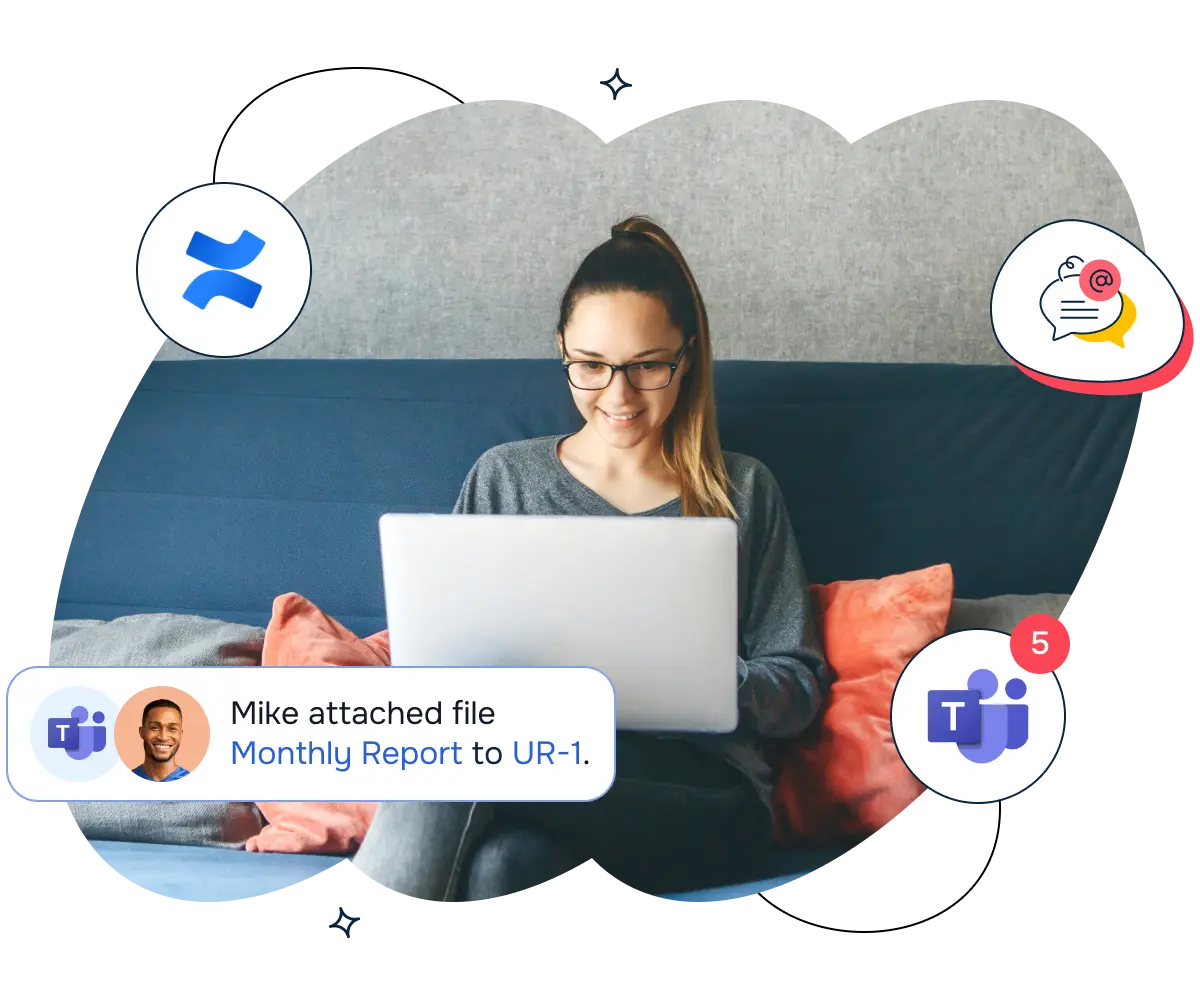


Never miss an important update or deadline with real-time notifications and integration between Microsoft Teams and Confluence.

Flexible and powerful configuration options to tailor the integration to fit your team's unique needs. Easily customize and adjust settings to optimize documentation management.

Ensure deadlines are met with our scheduled reports and alerts. Keep track of task progress and ensure everything runs smoothly and nothing falls through the cracks.
Watch how you can integrate Confluence with Microsoft Teams


This integration delivers real-time Confluence notifications to Microsoft Teams channels, with rich previews that show actual page content. Your team can search, share, and even comment on Confluence pages without ever opening a browser tab.
Product, engineering, HR, legal, and operations teams in Microsoft 365 organizations that maintain documentation, policies, and knowledge bases in Confluence. Especially valuable for distributed teams where Confluence is the single source of truth.
When someone updates a critical spec, policy, or release note in Confluence, the rest of the team doesn't know unless they happen to check. People copy-paste Confluence links into Teams chats, but those links don't show content - just a URL. Comments on Confluence pages go unread because nobody checks the notification bell.
This integration delivers real-time Confluence notifications to Microsoft Teams channels, with rich previews that show actual page content. Your team can search, share, and even comment on Confluence pages without ever opening a browser tab.
Key Differentiators:
A global consulting firm with 500+ consultants maintains their methodology, templates, and client-facing guides in Confluence. Teams across four regions work in Microsoft Teams. When a methodology update is published in Confluence, only the author knows it happened.
The challenge: Consultants miss critical updates to proposal templates, compliance guides, and methodology docs. They discover they used an outdated template only after submitting a deliverable. The knowledge management team sends email announcements, but they get buried in inboxes and ignored.
How the connector helps:
The result: Methodology compliance improves because teams see updates immediately. The knowledge management team stops sending announcement emails that nobody reads. Documentation feedback increases because commenting from Teams is frictionless.
A software company's engineering teams write technical specs, architecture decision records (ADRs), and runbooks in Confluence. Their daily collaboration happens in Microsoft Teams. Specs go through multiple review cycles before implementation begins.
The challenge: An architect publishes a spec and shares the link in Teams. Reviewers bookmark it but forget to check back. Comments pile up on the Confluence page, but the reviewers do not see them because they are in Teams all day. Review cycles stretch from days to weeks because feedback loops are slow.
How the connector helps:
The result: Spec review cycles shorten from 2 weeks to 3-4 days. Architects get feedback faster, and reviewers spend zero time checking Confluence for updates they might have missed.
A 2,000-person company manages all internal policies - PTO, expense, security, code of conduct - in Confluence. HR and Legal update these policies quarterly. Every employee needs to be aware of changes, but most employees never open Confluence.
The challenge: Policy updates are announced via company-wide email, which employees routinely ignore. When a travel expense policy changes, employees only find out when their expense report is rejected. HR fields dozens of questions that are already answered in the updated policy page.
How the connector helps:
The result: Policy awareness increases significantly. HR sees fewer questions about policy changes because employees see the updates in their daily workflow. Compliance-related policy updates reach the entire organization within hours instead of being discovered weeks later.
A product team writes release notes, API documentation, and customer-facing guides in Confluence. Engineering, product, technical writing, and customer success all contribute. The release cycle is bi-weekly, and documentation must be reviewed and published before each release.
The challenge: Technical writers update API docs, but product managers do not see the changes until they manually check Confluence before the release. Customer success needs to review the release notes before they go to customers, but they find out about updates too late. Documentation bottlenecks delay releases.
How the connector helps:
The result: Documentation review no longer blocks releases. The entire release team has shared visibility into documentation progress, and the bi-weekly review meeting is replaced by async collaboration through Teams and Confluence.
Not sure if this is the right integration for your team? Read our detailed comparison guides:

We prioritize customer data privacy with GDPR-compliant data collection and processing.


Atlassian Marketplace Partners don’t have the tools to manage licenses, so you need to reach out to Atlassian Support.
You can renew the trial to extend your evaluation period up to 5 times. Afterwards, you will need to contact Atlassian and seek an approval from Atlassian Marketplace Partner.
For more details check out this blog.